One Token, One Vote — If You Can Afford It: The Uncomfortable Truth About DAO Governance
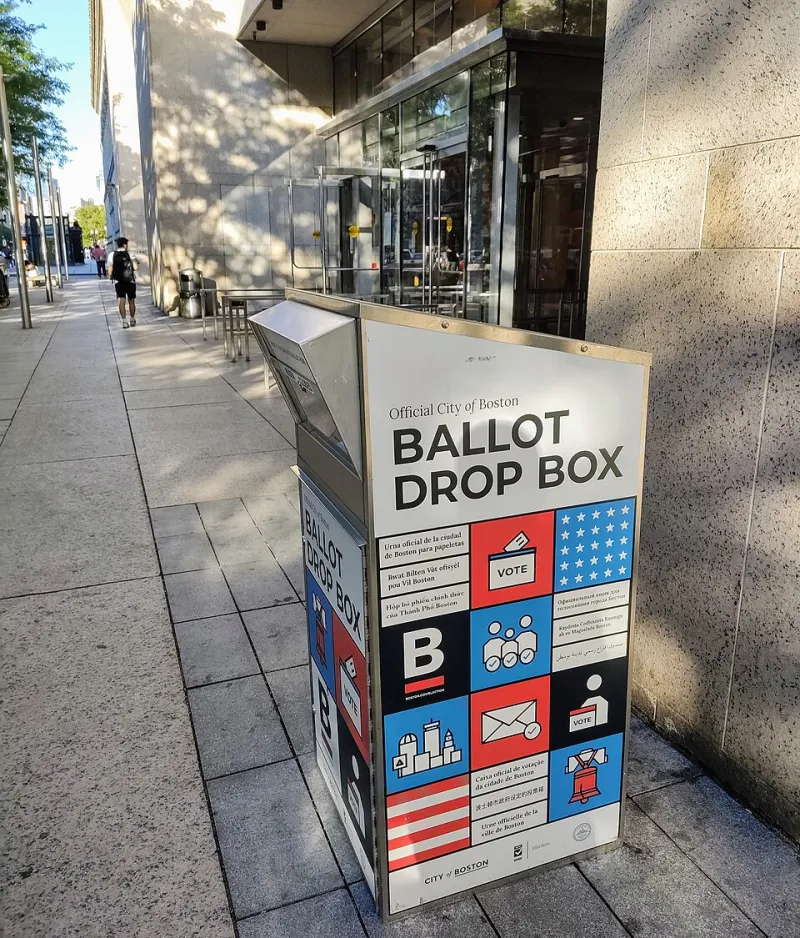
Photo: Whoisjohngalt, CC BY-SA 4.0, via Wikimedia Commons
The pitch is genuinely appealing. Instead of a board of directors operating behind closed doors, a community of token holders votes openly on every significant decision. Protocol upgrades, treasury allocations, fee structures, partnership agreements — all subject to transparent, on-chain democratic process. Power to the participants.
It is the kind of narrative that resonates deeply in a country with a long tradition of skepticism toward concentrated institutional authority. And in its idealized form, the decentralized autonomous organization — the DAO — represents something worth taking seriously as a governance innovation.
But idealized forms and operational realities are different things. After years of watching major DAOs conduct their governance in public, a pattern has emerged that deserves honest examination: in many cases, the architecture of token-based voting produces outcomes that resemble the centralized power structures it was meant to replace. The mechanisms are different. The concentration is not.
How Token Voting Actually Works
To understand why governance can become concentrated, it helps to understand the basic mechanics. In most DAOs, governance rights are distributed proportionally through a native token. One token equals one vote. Holders who accumulate more tokens accumulate more voting power. Proposals reach execution when they clear defined thresholds — often a quorum requirement plus a supermajority of votes cast.
On paper, this is straightforward. In practice, token distribution is rarely even. Early investors, founding teams, and venture capital backers frequently receive large token allocations as part of the project's initial funding structure. By the time a protocol launches publicly and retail participants can acquire tokens, a significant percentage of voting power may already be concentrated among a handful of wallets.
This is not necessarily a result of bad intent. It reflects the economic realities of how most blockchain projects are capitalized. Seed-stage investors take on substantial risk and receive tokens at prices far below public market levels. Those tokens carry governance rights. The result, by the time ordinary users arrive, is a voting landscape that is already substantially unequal.
The Whale Dynamics Playing Out in Real Governance
Research into on-chain governance activity has consistently documented the concentration problem. Analyses of major protocols have found that the top ten wallets by token holdings frequently control enough voting power to determine the outcome of any proposal, regardless of how remaining holders vote.
In some cases, a single entity — a venture fund, a founding team wallet, or an anonymous large holder — controls enough tokens to single-handedly pass or block proposals. This is not a hypothetical scenario. Governance votes on protocols with billions of dollars in total value locked have been decided by the participation of one or two dominant wallets.
For retail investors who hold governance tokens expecting meaningful influence, this arithmetic is sobering. A holder with a thousand dollars in governance tokens, in a protocol where a single wallet controls thirty percent of the supply, is not a meaningful participant in governance. They are a spectator with a symbolic stake.
Voter Apathy and the Quorum Problem
Concentration is compounded by a second phenomenon: participation rates in DAO governance are frequently very low. Across many major protocols, a significant portion of token holders never vote on anything. Some do not know they can. Others find the process of reviewing proposals, understanding technical implications, and casting on-chain votes too burdensome relative to the perceived impact of their individual vote.
This apathy creates a secondary problem. When quorum requirements are set at levels that assume broad participation, low turnout can make it impossible to pass legitimate proposals. When quorum requirements are set low enough to accommodate realistic turnout, a small group of motivated actors can push through changes without anything approaching community consensus.
Some protocols have responded with delegation systems, allowing passive holders to assign their voting power to active community members or delegates who follow specific governance philosophies. This is a genuine improvement. However, it also introduces a representative layer that, in some cases, reconcentrates power among a small group of trusted delegates — reproducing, at a different level, the same dynamics the original system was meant to avoid.
When Governance Becomes a Performance
Perhaps the most candid assessment comes from observing what happens when governance votes do not go the way large holders prefer. In several notable cases, governance decisions that were passed by community vote were subsequently delayed, modified, or effectively ignored through technical or procedural means controlled by core development teams.
This points to a distinction that retail investors would do well to internalize: on-chain governance rights and actual operational control are not always the same thing. Many protocols retain administrative keys, multisig wallets, or upgrade mechanisms that give founding teams the practical ability to override or delay governance outcomes. The governance process may be real in form while remaining advisory in substance.
None of this means DAOs are fraudulent by design. It means the gap between governance marketing and governance reality is often substantial, and that investors should evaluate the actual power structure of a protocol rather than its stated philosophy.
What Genuine Governance Looks Like
Not all DAOs are governance theater. Some have made meaningful progress toward structures that offer retail participants real influence. Evaluating them requires looking past the marketing and examining specific design choices.
Token distribution matters enormously. Protocols that have distributed tokens broadly — through extended public participation, retroactive airdrops to genuine users, or community grants — start with a more equitable power base than those that concentrated early allocations among a small group of insiders.
Transparency in the proposal process matters. Are proposals written in accessible language, or do they require specialized technical knowledge to evaluate? Is there a structured discussion period before voting, where community concerns can be raised and addressed? Are voting results and participation rates publicly visible and easy to interpret?
Administrative controls matter. Has the development team committed to a timeline for relinquishing control mechanisms? Are multisig arrangements publicly documented, with named or verifiable keyholders? Has the protocol survived governance transitions where founding team preferences were overridden by community vote?
Practical Guidance for Retail Investors
For American investors considering governance token positions, the recommendation is not to dismiss DAOs as a category. It is to apply the same analytical discipline you would to any other investment structure.
Research the token distribution. Check whether on-chain data reveals high concentration among a small number of wallets. Review the governance history — have proposals passed that clearly served whale interests at the expense of smaller holders? Examine whether the protocol has ever executed a genuinely contested governance decision against the preferences of its largest token holders.
Governance tokens can carry real value when the governance they represent carries real power. The due diligence required to distinguish one from the other is not glamorous work. But in a space where the language of democratization is used freely and the underlying structures vary enormously, it is the work that protects your capital.