Not All Dollar Tokens Are Created Equal: A Hard Look at Stablecoin Safety
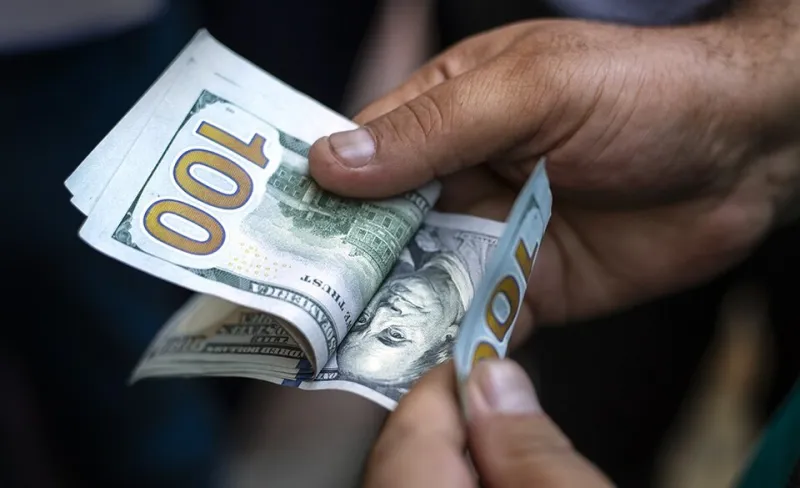
Photo: عکاس: محمدمهدی دورانی, CC BY 4.0, via Wikimedia Commons
For many investors entering decentralized finance, stablecoins represent a logical first step. They carry the ticker symbols of familiarity — USDC, USDT, DAI — and they trade at or near one US dollar. The implicit promise is stability in a market otherwise defined by volatility. Yet that promise, upon closer examination, rests on very different foundations depending on which stablecoin you hold.
Understanding those foundations is not a matter of technical curiosity. It is a prerequisite for sound portfolio management in any DeFi strategy.
What a Stablecoin Actually Is — and Isn't
At its core, a stablecoin is a digital asset designed to maintain a consistent value relative to a reference asset, most commonly the US dollar. The mechanism by which that peg is maintained, however, varies dramatically across different projects — and those variations carry meaningful risk implications.
There are three primary categories investors should understand: fully-reserved fiat-backed tokens, fractionally-backed or mixed-reserve tokens, and algorithmic stablecoins. Each operates on a different set of assumptions about what "backed" actually means.
Fully-Reserved Stablecoins: The Gold Standard — With Caveats
A fully-reserved stablecoin, in theory, holds one dollar (or its equivalent in highly liquid assets) in reserve for every token in circulation. USD Coin (USDC), issued by Circle, is frequently cited as an example of this model. Circle publishes monthly attestation reports from accounting firms, and USDC reserves are reportedly held in cash and short-duration US Treasury securities.
This structure is the closest analog to what most Americans would consider a "safe" asset. However, even here, important nuances apply. Attestations are not the same as full audits. An attestation confirms that a snapshot of reserves matched circulating supply on a given date — it does not provide the continuous, comprehensive scrutiny of a formal audit. Investors should read these reports carefully and distinguish between what is being confirmed and what is being assumed.
Furthermore, the custodial institutions holding those reserves carry their own counterparty risk. When Silicon Valley Bank collapsed in March 2023, USDC briefly de-pegged to approximately $0.87 because a portion of Circle's reserves were held there. The token recovered quickly, but the episode illustrated that even the most transparent stablecoin is not immune to traditional financial system disruptions.
Fractionally-Backed and Mixed-Reserve Models: Reading the Fine Print
The more complicated — and, for many investors, more concerning — category involves stablecoins whose reserves include assets beyond cash and Treasuries. Tether (USDT), the largest stablecoin by market capitalization, has faced sustained scrutiny over its reserve composition. Regulatory actions, including a 2021 settlement with the New York Attorney General's office and a subsequent settlement with the Commodity Futures Trading Commission, revealed that Tether had at various points held commercial paper, loans to affiliated entities, and other non-cash instruments as backing.
Tether has since published quarterly assurance reports indicating a shift toward US Treasury holdings, but independent verification remains limited. For investors who use USDT extensively in DeFi protocols — for yield farming, as collateral, or for bridging between chains — understanding what underlies each token is not optional. It is due diligence.
Mixed-reserve models, which combine fiat collateral with crypto assets or other instruments, introduce additional complexity. DAI, issued by MakerDAO, is overcollateralized with a basket of assets including ETH, USDC, and real-world asset tokens. Overcollateralization provides a buffer against volatility, but it also means that DAI's stability is contingent on the health of its collateral pool and the governance decisions of MakerDAO's decentralized autonomous organization.
Algorithmic Stablecoins: A Cautionary Chapter
No discussion of stablecoin risk is complete without addressing algorithmic models — those that rely not on reserves but on code-driven supply adjustments to maintain their peg. The collapse of TerraUSD (UST) in May 2022 erased approximately $40 billion in market value within days and remains the most consequential case study in algorithmic stablecoin failure.
UST's peg depended on an arbitrage relationship with its sister token, LUNA. When confidence in that mechanism eroded, the system entered a death spiral that no algorithmic adjustment could arrest. Billions of dollars in retail investor savings were effectively wiped out.
Pure algorithmic stablecoins have largely lost credibility in the market following that event. Some projects have pivoted to hybrid models with partial backing, but investors should approach any stablecoin that relies primarily on tokenomic mechanisms — rather than tangible reserves — with significant caution.
A Framework for Evaluating Stablecoin Credibility
Given the spectrum of structures described above, how should a US-based DeFi investor evaluate a stablecoin before incorporating it into their strategy? Consider the following framework:
1. Transparency of reserves. Does the issuer publish regular, third-party verified reports? Are those reports full audits or attestations? What asset categories are included in the reserve?
2. Regulatory standing. Has the issuer faced enforcement actions? Are they operating under a money transmitter license or equivalent regulatory framework in the United States?
3. Historical peg stability. Has the stablecoin maintained its peg during periods of market stress? Brief deviations are common; prolonged or severe de-pegging events signal structural weakness.
4. Collateralization model. Is the backing fiat-based, crypto-based, overcollateralized, or algorithmic? Each carries a distinct risk profile.
5. Issuer concentration risk. A stablecoin whose reserves are held at a single institution or whose governance is controlled by a small number of entities carries concentration risk that diversified alternatives may not.
The Regulatory Horizon
The US regulatory environment around stablecoins is evolving rapidly. Congress has debated stablecoin legislation that would impose reserve requirements, audit standards, and licensing obligations on issuers. The outcome of that legislative process will materially affect which stablecoins remain viable for American investors and which may face operational constraints.
For now, investors should not assume that a stablecoin's longevity or market capitalization is itself a guarantee of safety. Size provides liquidity; it does not guarantee solvency or transparency.
Stability Is Earned, Not Assumed
The word "stable" in stablecoin is a design objective, not a guarantee. Every stablecoin in your DeFi portfolio represents a set of assumptions about reserves, governance, and market confidence — assumptions that deserve the same scrutiny you would apply to any other financial instrument. At EOX Coin, our position is straightforward: decentralized finance rewards informed participants. The stablecoin you choose as a safe harbor should be one you have genuinely evaluated, not simply one you have heard described as safe.