Taxed on Tokens You Never Kept: The IRS Reality Facing DeFi Yield Farmers in 2024
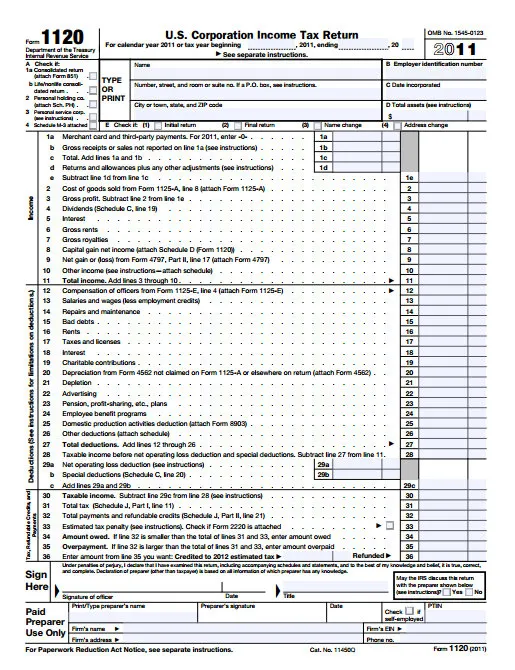
Photo: Internal Revenue Service, Public domain, via Wikimedia Commons
There is a particular category of financial misfortune that is unique to decentralized finance: owing taxes on money you never actually had. For yield farmers operating across DeFi protocols in the United States, this is not a hypothetical scenario. It is a documented, recurring consequence of how the IRS currently treats digital asset income — and how poorly that framework maps onto the realities of on-chain finance.
This article does not offer legal or tax advice. It is an editorial examination of the regulatory landscape as it currently stands, intended to help US investors understand the risks they face and the documentation practices that may help them navigate an audit.
How the IRS Treats Yield Farming Rewards
The Internal Revenue Service has established, through Revenue Ruling 2023-14 and prior guidance, that cryptocurrency received as income — including staking rewards, liquidity mining distributions, and yield farming payouts — is taxable as ordinary income at the time of receipt. The taxable amount is the fair market value of the tokens at the moment they are received into the taxpayer's wallet.
This principle creates a straightforward liability in straightforward circumstances. A farmer deposits assets into a liquidity pool, earns 500 governance tokens over the course of a month, and those tokens are worth $2 each at the time of distribution. The farmer recognizes $1,000 in ordinary income regardless of whether they sell the tokens, hold them, or subsequently watch them decline in value.
The complications arise — and they arise frequently in DeFi — when the tokens received as rewards never survive long enough to be converted, sold, or even meaningfully held.
The Flash Loan Liquidation Problem
Flash loan attacks represent one of the most technically sophisticated threats in the DeFi ecosystem. In a typical exploit, an attacker borrows a large sum through a flash loan, manipulates an asset price or protocol state within a single transaction block, extracts value from the targeted protocol, and repays the loan — all before the block closes.
For liquidity providers and yield farmers in the targeted protocol, the consequences can be immediate and severe. Accrued rewards may be drained. Deposited principal may be partially or fully lost. The positions that were generating income may be rendered worthless within seconds.
The tax question this raises is uncomfortable: if a yield farmer had accrued rewards that were distributed to their wallet address in the same block that a flash loan attack drained those rewards, did they receive taxable income?
The IRS has not issued specific guidance addressing this scenario. The general principle of constructive receipt — which holds that income is taxable when a taxpayer has an unrestricted right to receive it — may apply, but the practical application to sub-second on-chain events is genuinely ambiguous. What is not ambiguous is that a taxpayer who reports that income and subsequently claims a theft or casualty loss faces a complex documentation burden that most tax professionals are not equipped to handle.
Validator Slashing and the Staking Income Trap
For investors participating in proof-of-stake validation or delegating to validators as part of a yield strategy, slashing penalties introduce a similar paradox. Validators who violate protocol rules — through double-signing, extended downtime, or other infractions — face the automatic destruction of a portion of their staked assets.
Consider a US investor who stakes ETH through a liquid staking protocol, earns staking rewards over several months, and then sees a portion of their principal slashed due to a validator client error. The investor recognized ordinary income on each reward distribution as it occurred. The slashing event, however, is a loss of principal — and the tax treatment of that loss depends on the character of the asset and how it is classified.
The interaction between previously recognized income and a subsequent principal loss creates a mismatch that standard crypto tax software typically fails to model correctly. The income was real at the time it was recognized. The loss is real when it occurs. But the net economic outcome may be a loss, while the tax record shows a profit.
Smart Contract Exploits and the Theft Loss Limitation
Prior to the Tax Cuts and Jobs Act of 2017, taxpayers could deduct theft and casualty losses on their federal returns with relative flexibility. The TCJA substantially restricted those deductions, limiting personal casualty and theft losses to federally declared disaster areas through 2025.
For DeFi investors who lose funds to smart contract exploits — a category that includes rug pulls, oracle manipulation attacks, and protocol vulnerabilities — this restriction means that losses may not be deductible at the federal level under current law, even when the theft is unambiguous and well-documented.
The practical consequence is that an investor who recognized $20,000 in yield farming income over a calendar year, only to lose $18,000 of their principal to a protocol exploit in the same year, may owe taxes on the full $20,000 of income with limited ability to offset it against the loss. This outcome is not a bug in the system from the IRS's perspective — it is a direct result of how the law currently applies to digital asset losses.
Some tax professionals argue that losses from DeFi exploits may qualify as ordinary losses under Section 165 of the Internal Revenue Code when the investment was made in a trade or business context, rather than as a personal investment. This argument requires careful documentation and carries meaningful audit risk. Investors considering this approach should work with a tax professional who has specific experience in digital asset taxation.
Documentation Strategies for Edge-Case Scenarios
The common thread across all of these scenarios is that standard tax software — even platforms marketed specifically to crypto investors — is not designed to handle them. These tools are built to process transaction histories and calculate gains and losses on asset sales. They are not equipped to model constructive receipt disputes, slash-event loss characterization, or the interaction between exploit losses and previously recognized income.
Investors who participate in yield farming, staking, or liquidity provision should maintain documentation practices that go substantially beyond an exported transaction CSV.
Maintain timestamped records of all reward accruals. For protocols that distribute rewards continuously rather than in discrete events, record the accrued balance at regular intervals — weekly at minimum — along with the spot price of the reward token. This establishes a defensible basis for the income recognized.
Document exploit and slashing events immediately. When a loss event occurs, preserve on-chain evidence: the transaction hash of the exploit, the block number, the protocol's official incident report, and any communication from the protocol team. Screenshot your position before and after the event. Time-stamp everything.
Separate business-context investing from personal investing. If your DeFi activity is conducted at a scale and frequency that could reasonably be characterized as a trade or business — rather than passive personal investment — the loss treatment options available to you may be more favorable. This determination is fact-specific and requires professional guidance.
Do not rely on a single tax software platform. Run your transaction history through multiple tools and compare the outputs. Discrepancies often reveal transactions that have been miscategorized or omitted. Bring the full transaction history to a tax professional rather than simply importing the software's output.
Prepare a written narrative for complex positions. In the event of an audit, an IRS examiner will not intuitively understand what a liquidity pool is, how rewards accrue, or why a position that generated income on paper resulted in a net economic loss. A clear, chronological written explanation of each complex position — attached to your return or maintained in your records — can meaningfully reduce the friction of an audit examination.
The Regulatory Horizon
The IRS and Treasury Department are actively developing additional guidance on digital asset taxation, including provisions introduced under the Infrastructure Investment and Jobs Act that will require brokers to report digital asset transactions beginning in 2026. Whether that guidance will address the specific edge cases discussed here remains to be seen.
In the meantime, US yield farmers operate in a regulatory environment that imposes income tax obligations at the moment of receipt, offers limited loss relief when those receipts are subsequently destroyed, and provides sparse formal guidance on the most complex scenarios the technology produces. Navigating that environment requires documentation discipline, professional support, and a clear-eyed understanding of the obligations that DeFi participation creates — before the rewards arrive, not after they disappear.