Chasing Numbers That Vanish: How DeFi Yield Rates Are Built to Collapse
For many first-time participants in decentralized finance, the initial discovery of a protocol offering 150%, 300%, or even 1,000% annual percentage yield feels like uncovering a financial secret the traditional banking world has been hiding. Savings accounts at major US banks hover near 4–5% in the current rate environment. A DeFi protocol promising returns fifty times that figure commands attention.
The uncomfortable reality is that most of those figures are not yields in any conventional sense. They are, more accurately, a form of deferred cost — paid in tokens that are being created from nothing, distributed to users to manufacture the appearance of a thriving ecosystem, and ultimately dependent on a continuous stream of new capital to maintain their value. When that stream slows, the numbers collapse with remarkable speed.
Understanding why this happens — and how to identify protocols where it is happening — is among the most practical skills a US-based DeFi investor can develop.
What "Yield" Actually Means in a Traditional Context
In traditional finance, yield represents a return generated by a productive underlying asset. A bond pays interest because a borrower is using capital and compensating the lender for that use. A dividend-paying stock distributes a portion of genuine corporate earnings. The yield is downstream of real economic activity.
Decentralized finance introduced a new category: yield generated not from external economic activity, but from the protocol itself printing and distributing its own governance or utility tokens. This is the mechanism behind liquidity mining programs, and it is the source of most headline-grabbing APY figures in the space.
When a protocol advertises 200% APY, the question every investor should ask is: what is generating that return? If the answer is "the protocol's native token," the follow-up question becomes even more important: where does that token's value come from?
The Token Emissions Engine
Liquidity mining works by rewarding users who deposit assets into a protocol with newly issued tokens. The more capital deposited, the more tokens distributed. During bull markets, this creates a self-reinforcing cycle that feels sustainable from the inside.
Here is the sequence: A protocol launches and begins distributing tokens to liquidity providers. Early participants receive tokens at low cost and sell a portion, generating real dollar returns. News of those returns attracts additional capital. More depositors arrive, increasing demand for the token and elevating its price. Higher token prices push the APY figure even higher in dollar terms, attracting still more capital. The protocol's TVL (total value locked) swells. Press coverage follows.
At its peak, this cycle produces genuine winners — specifically, those who entered earliest and exited before the inflection point. For everyone who arrives during the growth phase and holds, the outcome is typically far less favorable.
Case Study: The Anatomy of a Yield Collapse
Without naming any single protocol in isolation, a pattern emerged repeatedly across the 2020–2022 DeFi expansion that illustrates the dynamic clearly.
A protocol would launch with an aggressive emissions schedule — tens of millions of governance tokens distributed over the first several months to attract liquidity. With token prices elevated by speculative demand, the APY displayed on the protocol's interface would reach extraordinary figures. Depositors would arrive, further elevating token prices through demand pressure.
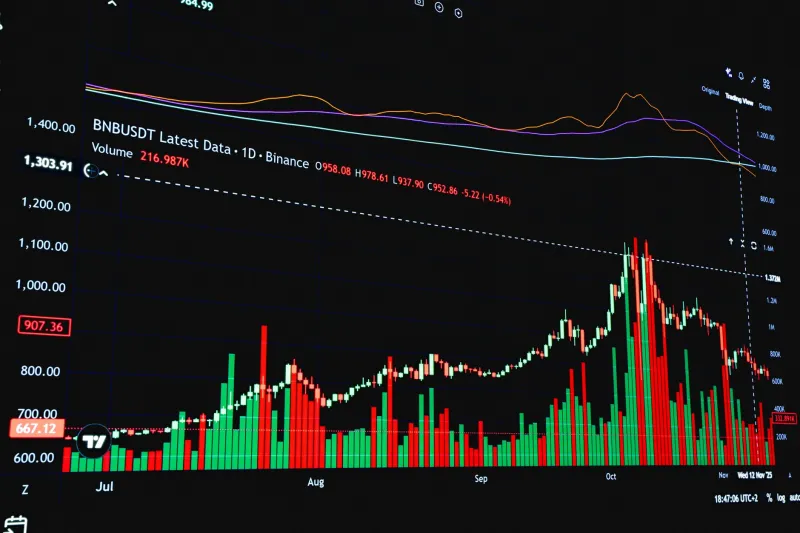
The inflection point arrived when one of several triggers occurred: the broader crypto market entered a correction, the emissions schedule reduced token output, or a competing protocol launched with even higher incentives and drew capital away. In each case, the sequence ran in reverse. Token prices fell. APY figures in dollar terms dropped sharply. Capital exited, reducing liquidity and further pressuring token prices. Within weeks of a market shift, protocols that had displayed four-digit APY figures were showing single digits — or had ceased meaningful operations entirely.
Investors who had deposited stablecoins to "safely" capture yield discovered that their rewards, denominated in the protocol's native token, had lost 80–95% of their value before they could be liquidated.
Why This Is Not Simply "High Risk, High Reward"
A common defense of aggressive yield programs is that investors understand the risk profile. But this framing obscures a structural issue: the risk in many of these programs is not proportional to the stated return.
In a legitimate high-risk investment, the elevated return compensates for the probability of loss. In a token emissions program, the "yield" is paid in an asset whose value is entirely contingent on the continuation of the same dynamic that is producing the yield. It is closer in structure to a referral-based compensation scheme than to an investment return — the payout depends not on productive activity, but on the next wave of participants sustaining demand.
This distinction matters for US investors not only for financial reasons, but for regulatory ones. The Securities and Exchange Commission has signaled increasing interest in whether certain DeFi yield programs constitute unregistered securities offerings. Participation in programs that fit a particular structural profile carries compliance exposure that purely financial analysis does not capture.
A Framework for Evaluating DeFi Yield
Not all DeFi yield is manufactured. Protocols that generate fees from genuine user activity — lending interest paid by actual borrowers, trading fees from organic swap volume, real-world asset yield passed through on-chain — produce returns that are grounded in economic activity. These returns are typically lower, but they are also structurally different.
When evaluating any yield opportunity, consider the following questions:
What is the source of the return? If the protocol cannot clearly explain what activity generates the yield — if the answer is simply "token rewards" — treat the figure with significant skepticism.
What is the token's inflation rate? A protocol distributing millions of tokens monthly to sustain a high APY is diluting existing holders continuously. Even if the token price holds steady, new emissions represent a transfer of value from existing holders to new depositors.
What does the APY look like net of token price decline? Many platforms display APY calculated at current token prices. A token that loses 50% of its value over the period in which you are earning it cuts your effective yield in half, regardless of what the interface displays.
How long has the protocol been operating? Emissions schedules are typically front-loaded. A protocol in its first 90 days may display figures that are mathematically impossible to sustain past the initial distribution phase.
Is there organic volume independent of incentives? A protocol with genuine user demand will maintain activity even when token incentives are reduced. One whose volume disappears when incentives are cut was never generating real economic activity.
The Longer View
Decentralized finance represents a genuine structural innovation in how financial services can be delivered. Permissionless lending, on-chain trading, and programmable financial logic offer real utility. The yield opportunities that emerge from those activities — when grounded in actual economic demand — are legitimate and worth understanding.
But the history of the space includes a significant volume of programs that were, in structural terms, unsustainable from inception. They generated substantial wealth for early participants and substantial losses for later ones. The mathematics were never in question; the timing was.
For US investors approaching DeFi yield, the most durable posture is one of deliberate skepticism toward any figure that appears disconnected from an identifiable economic source. The protocols that survive market cycles are, almost without exception, the ones whose yield was real to begin with.